
中高等部
G7 – 【社会科授業紹介】メディアの「フィルター」を読み解く―選挙結果と情報リテラシー― / [Social Studies Update] Deciphering Media “Filters”: Election Results and Information Literacy
7年生(中学1年生)の社会科(I&S:Individuals and Societies)では、先日行われた選挙結果をもとに、情報がどのような視点で作成されているのかを考える授業を行いました。
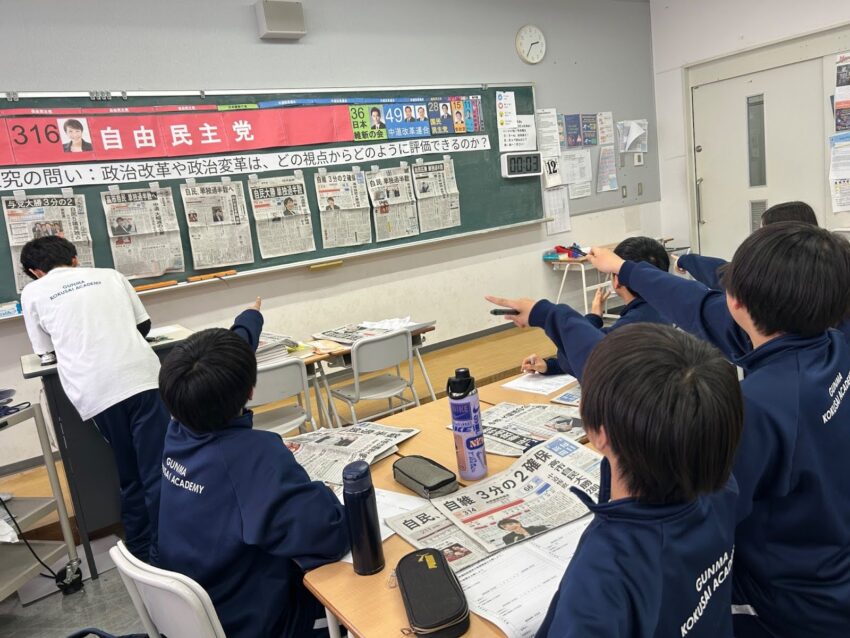
7年生の歴史の単元では、探究の問い「政治改革や政治変革は、どの視点からどのように評価できるのか?」について学習を行っています。楽市楽座や寛政の改革など、様々な政策や改革が、誰にとって良かったのか、視点を意識して学習しています。
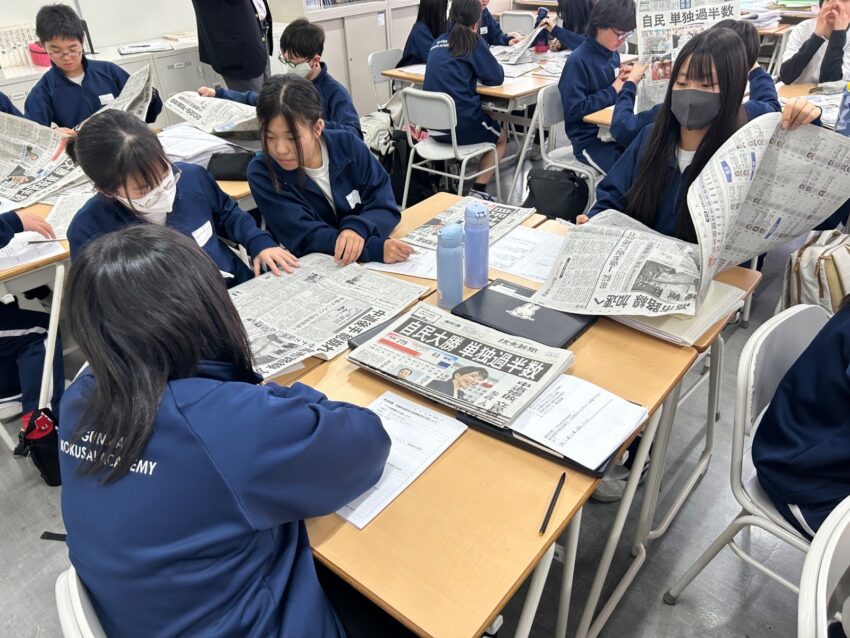
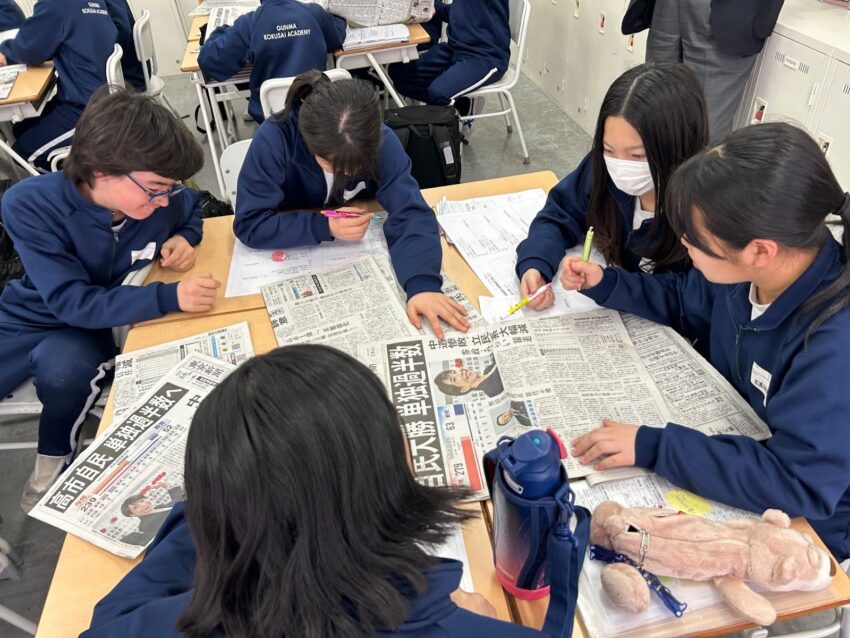
今回の授業で取り上げた先の衆院選の結果もまた、大きな政治変革と言えます。探究の問いの理解を深めるため、新聞7紙の見出しや社説を比較しながら選挙結果の評価の違いに気づくことで、その背後にある視点について考えることができました。
私たちの周りにあふれる情報の一つ一つは、誰かが作成したものです。同じ事実であっても、それぞれの書き手のフィルターを通ることで、異なる表現として私たちのもとに届きます。生徒の皆さんには、書き手の立場を考えながら情報を読み取る習慣をつけてもらいたいと願っています。
In our Grade 7 Individuals and Societies (I&S) class, we recently held a session to examine how information is constructed through specific perspectives, using the results of the recent general election as our primary resource.
In our current History unit, students are exploring the inquiry question: “How can we assess political reforms and transformations from different perspectives?” To build a foundation for this, we have been studying various historical policies, such as Rakuichi-Rakuza and the Kansei Reforms, focusing on who benefited from these changes and how different stakeholders viewed them.
The results of the recent House of Representatives election also represent a significant “political transformation.” To deepen their understanding of our inquiry question, students compared headlines and editorials from seven different newspapers. By noticing the differences in how the election results were evaluated, they were able to reflect on the underlying perspectives behind each report.
Every piece of information surrounding us is created by someone. Even when the facts remain the same, they reach us as different expressions once they pass through the “filter” of the writer.
We hope our students will develop the habit of reading information critically, always considering the position and context of the author.