
中高等部
G8 – MYP Design (Tech):現実のフードシステムからSDGsを学ぶ/Learning SDGs Through Real Food Systems
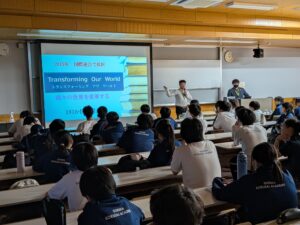
生活協同組合パルシステム群馬から2名の講師 をお招きし、Grade 8 の MYP Design(Tech)の授業で講演会を実施しました。生徒たちは、SDGs を「食」や「農業」の視点から具体的に考える貴重な機会を得ました。
講演では、日本の農業が直面している農家の高齢化という現状に触れながら、その課題に対してどのような仕組みで支えているのかをご紹介いただきました。特に印象的だったのは、次のような取り組みです。
予約生産:作付け前に必要な生産量を共有し、計画的に育てることで、農家の負担や食品ロスを減らす仕組み
“知”産”知”消:誰がどこで生産したのかが分かる食材を選び、消費者が生産者とつながる考え方
規格外野菜の活用:形や大きさが規格に合わない野菜も、価値ある食材として流通させる工夫
これらの実践例を通して、生徒たちは「安くてきれいな野菜」を選ぶ消費行動の裏側にある努力や工夫に気づき、持続可能な食の仕組みについて理解を深めました。
また、課題解決の具体的なアクションとして、各地の学校で行われているフードドライブ活動の紹介がありました。本校でもこの活動に取り組むことで、食品ロスの削減だけでなく、地域や社会への貢献、モラル教育とのつながりを生み出していこうと考えています。
さらに、希望者を対象に、契約農家での産地見学や農業体験の機会についてもご提案いただきました。
昭和村 の契約農家を訪問し、実際に野菜の収穫や農作業を体験するプログラムです。この体験は教室での学びを、本物の現場で確かめる貴重な機会となるでしょう。
今回の講演を通して、生徒たちは SDGs を「知識」として学ぶだけでなく、自分たちの選択や行動が社会を支えていることを実感しました。今後も、生徒たちが社会課題を自分事として捉え、持続可能な社会の実現に向けて主体的に行動できるよう、学校での学びを実践的な活動へとつなげてまいります。
We invited two guest speakers from the Pal System Consumers’ Cooperative Gunma to give a special lecture in the Grade 8 MYP Design (Tech) class. The session provided students with a valuable opportunity to explore the SDGs from the perspectives of food and agriculture.
During the lecture, the speakers discussed the current challenges facing Japanese agriculture, particularly the aging farming population, and introduced systems and initiatives designed to support farmers and create a more sustainable food system. Among the most memorable examples were:
Pre-order Production
A system in which production amounts are shared before planting, allowing farmers to grow crops more efficiently while reducing both their burden and food waste.
“Knowing the Producer, Knowing the Consumer”
An approach that encourages consumers to choose foods with clear information about who produced them and where they were grown, strengthening the connection between producers and consumers.
Utilizing Non-standard Vegetables
Efforts to distribute vegetables that do not meet standard size or appearance requirements, recognizing them as valuable food products rather than waste.
Through these real-world examples, students became aware of the effort and innovation behind the “cheap and beautiful vegetables” they often see in stores and deepened their understanding of sustainable food systems.
The lecture also introduced food drive initiatives being carried out at schools across Japan as a concrete action toward solving social issues. Our school is also considering implementing similar activities to help reduce food waste while strengthening connections with the local community and moral education.
In addition, students were offered the opportunity to participate in optional farm visits and agricultural experiences at contracted farms. One proposed program involves visiting a contracted farm in Showa Village, where students would experience harvesting vegetables and participating in farm work firsthand. This experience would provide a valuable opportunity to connect classroom learning with real-world practice.
Through this lecture, students learned that the SDGs are not only concepts to study, but also issues connected to their own choices and actions in everyday life. Moving forward, we will continue to connect classroom learning with practical experiences so that students can view social issues as their own and take initiative toward building a more sustainable society.