
Secondary
G8 – MYP Design (Tech):Learning SDGs Through Real Food Systems
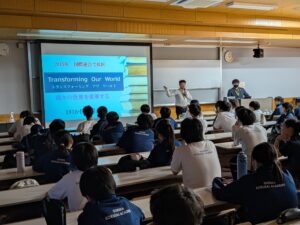
We invited two guest speakers from the Pal System Consumers’ Cooperative Gunma to give a special lecture in the Grade 8 MYP Design (Tech) class. The session provided students with a valuable opportunity to explore the SDGs from the perspectives of food and agriculture.
During the lecture, the speakers discussed the current challenges facing Japanese agriculture, particularly the aging farming population, and introduced systems and initiatives designed to support farmers and create a more sustainable food system. Among the most memorable examples were:
Pre-order Production
A system in which production amounts are shared before planting, allowing farmers to grow crops more efficiently while reducing both their burden and food waste.
“Knowing the Producer, Knowing the Consumer”
An approach that encourages consumers to choose foods with clear information about who produced them and where they were grown, strengthening the connection between producers and consumers.
Utilizing Non-standard Vegetables
Efforts to distribute vegetables that do not meet standard size or appearance requirements, recognizing them as valuable food products rather than waste.
Through these real-world examples, students became aware of the effort and innovation behind the “cheap and beautiful vegetables” they often see in stores and deepened their understanding of sustainable food systems.
The lecture also introduced food drive initiatives being carried out at schools across Japan as a concrete action toward solving social issues. Our school is also considering implementing similar activities to help reduce food waste while strengthening connections with the local community and moral education.
In addition, students were offered the opportunity to participate in optional farm visits and agricultural experiences at contracted farms. One proposed program involves visiting a contracted farm in Showa Village, where students would experience harvesting vegetables and participating in farm work firsthand. This experience would provide a valuable opportunity to connect classroom learning with real-world practice.
Through this lecture, students learned that the SDGs are not only concepts to study, but also issues connected to their own choices and actions in everyday life. Moving forward, we will continue to connect classroom learning with practical experiences so that students can view social issues as their own and take initiative toward building a more sustainable society.