Secondary
G7-Materials That Shape the Future ~Learning Sustainable Manufacturing with Michelin~
In Grade 7 Design, students are studying materials processing technology, exploring the properties of different materials and how they are used to create products that support our daily lives. This year’s unit challenges students to design and create an upcycled product using waste materials to help solve problems in everyday life and society.
As an introduction to the unit, we welcomed engineers from Michelin Japan, who delivered a special lecture on materials research and environmental sustainability.
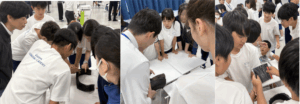
During the session, students learned about the wide variety of materials used in tires and the important role each material plays. They had the opportunity to examine actual tire materials and discovered how combining different materials can improve strength and performance. Students also learned that the arrangement and structure of these materials are carefully designed to achieve strength in specific directions, providing valuable insight into modern materials engineering.
The speakers also introduced the concepts of recycled materials and renewable materials, as well as Michelin’s research and development efforts to reduce environmental impact. One idea that particularly impressed the students was the importance of using materials that can be recycled within our own lifetime. This perspective encouraged them to think more deeply about sustainable resource use and the role of material selection in creating a better future.
Through this lecture, students learned that every material has unique properties and that selecting and combining materials appropriately is an essential part of engineering design. They also recognized that successful product design requires not only functionality and performance, but also consideration for the environment and resource sustainability.
In the coming weeks, students will apply what they learned by designing and creating upcycled products from waste materials. They will investigate which materials are most suitable for their designs, how different structures affect performance, and how the materials they choose can be recycled in the future. These experiences will help them develop creative and sustainable solutions through the design process.
This special lecture provided students with a valuable opportunity to learn directly from professionals working at the forefront of materials research and sustainable innovation. We sincerely thank Michelin Japan for inspiring our students and supporting their learning journey.